October 14, 2026
2026 Porsche 911 Turbo S vs. 2026 McLaren Artura: The Everyday Supercar Showdown
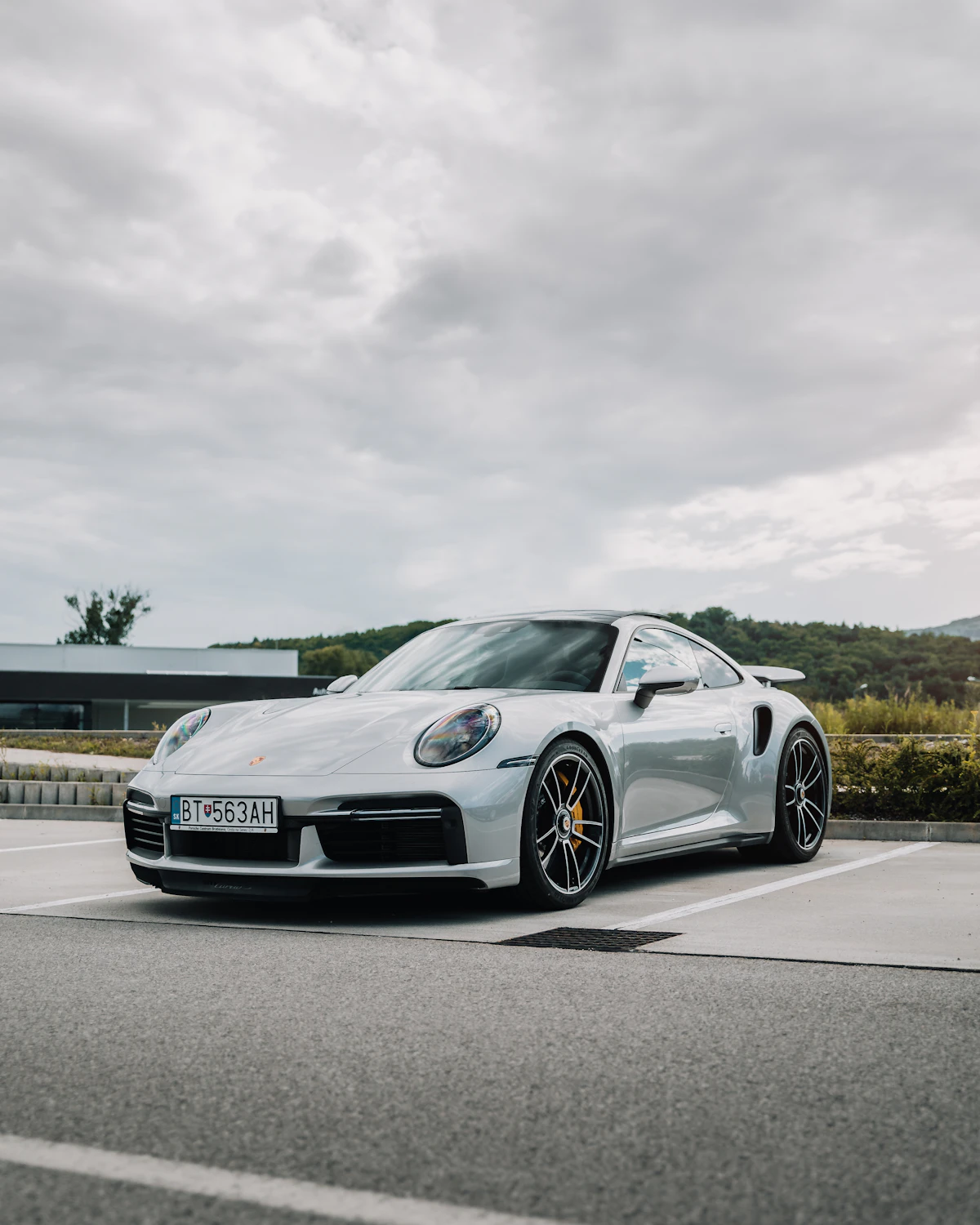
2026 Porsche 911 Turbo S vs. 2026 McLaren Artura: The Everyday Supercar Showdown
The modern supercar landscape has transcended pure straight-line speed. In an era where family electric crossovers can sprint to 60 mph in under three seconds, exotic flagships must deliver something far more elusive: unflinching mechanical engagement, track-ready endurance, and genuine daily drivability.
At the pinnacle of this high-dollar engineering arena sit two radically different visions of the modern supercar: the Porsche 911 Turbo S and the McLaren Artura.
For five decades, the Porsche 911 Turbo S has represented the gold standard of the all-weather, all-season daily supercar. Featuring a rear-mounted 3.8-liter twin-turbo flat-six, active all-wheel drive, rear-axle steering, and bulletproof launch control that can execute back-to-back 2.5-second sprints without overheating, the 911 Turbo S is an automotive engineering juggernaut.
Challenging German supremacy is Woking’s electrified clean-sheet prodigy: the McLaren Artura. Built around the featherweight McLaren Carbon Lightweight Architecture (MCLA), the Artura pairs a wide-angle 120-degree 3.0-liter twin-turbo V6 with an axial-flux electric motor. Churning out a combined 690 horsepower through an ultra-quick 8-speed dual-clutch transmission to the rear wheels, the Artura brings pure Le Mans-inspired monocoque chassis dynamics and silent pure-EV commuting capability to the mid-engine segment.
For high-net-worth enthusiasts deciding between the 2026 Porsche 911 Turbo S and the 2026 McLaren Artura, the purchase decision involves distinct engineering and financial trade-offs:
Do you invest in the legendary reliability, four-wheel-drive traction, and unmatched resale equity retention of the Porsche 911 Turbo S? Or does the exotic dihedral-door drama, carbon-tub steering purity, and electrified hybrid punch of the McLaren Artura earn your garage space?
Below is an engineering-first, consumer-advocate comparison analyzing real-world transaction pricing, powertrain mechanics, track telemetry, interior ergonomics, and five-year total cost of ownership (TCO).
MSRP vs. True Market Value: Showroom Allocations & Dealer Reality
Sticker MSRP represents only an initial entry point in the exotic supercar segment. Bespoke option lists, carbon-fiber packages, and tight dealership allocations dramatically alter showroom transaction values.
| Specification Tier | 2026 Porsche 911 Turbo S MSRP | 2026 McLaren Artura MSRP | Pricing Advantage |
|---|---|---|---|
| Base Model Starting MSRP | $230,400 (Coupe) | $238,000 (Coupe) | Porsche 911 (-$7,600) |
| Open-Top Convertible Spec | $243,200 (Cabriolet) | $273,800 (Artura Spider) | Porsche 911 (-$30,600) |
| Essential Carbon / Aero Package | +$10,400 (Sport Design Aero) | +$14,200 (Carbon Exterior Pack) | Porsche 911 (-$3,800) |
| Lightweight Track Package | +$10,340 (Lightweight Package) | +$9,800 (ClubSport Package) | McLaren Artura (-$540) |
| Average Optioned Transaction Price | $258,000 | $265,000 | Porsche 911 (-$7,000) |
- Porsche 911 Turbo S Dealership Realities: Manufactured in Zuffenhausen, Germany, the 911 Turbo S remains in fierce demand. Porsche franchise allocations are strictly guarded, with waitlists frequently stretching from 9 to 14 months. While dealer markups have softened from pandemic peaks, many metropolitan dealers still demand $10,000 to $25,000 in Market Adjustments (ADMs) or require trade-ins and prior purchase history to secure an allocation.
- McLaren Artura Showroom Dynamics: Hand-assembled at the McLaren Production Centre in Woking, England, the Artura benefits from improved factory throughput following initial production ramp-ups. McLaren retailers generally sell build slots at pure window sticker MSRP. For in-stock dealer inventory, buyers can often negotiate favorable lease incentives or complimentary carbon accessory packages valued between $5,000 and $10,000.
Powertrains, Transmissions & Mechanical Longevity
Behind the driver, both manufacturers showcase contrasting internal combustion philosophies, pitting German variable-turbine forced induction against British hybrid hybridization.
| Metric / Powertrain | 2026 Porsche 911 Turbo S | 2026 McLaren Artura | Engineering Distinction |
|---|---|---|---|
| Engine Architecture | 3.8L Twin-Turbo Flat-6 (VTG) | 3.0L 120° Twin-Turbo V6 + E-Motor | McLaren integrates axial-flux hybrid |
| Peak Horsepower | 640 hp @ 6,750 RPM | 690 hp @ 7,500 RPM | McLaren leads peak power (+50 hp) |
| Peak Torque Output | 590 lb-ft @ 2,500 RPM | 531 lb-ft @ 2,250 RPM | Porsche leads peak torque (+59 lb-ft) |
| Drivetrain Layout | Rear-Engine / All-Wheel Drive | Mid-Engine / Rear-Wheel Drive | Porsche offers standard AWD traction |
| Transmission Architecture | 8-Speed PDK Dual-Clutch | 8-Speed Seamless Shift Gearbox | McLaren lacks mechanical reverse gear |
| Electric-Only Driving Range | N/A (Pure Gas) | 11 Miles (7.4-kWh Battery) | McLaren offers zero-emissions stealth mode |
| 0–60 MPH Acceleration | 2.6 seconds (Consistent) | 2.9 seconds | Porsche launches 0.3 seconds faster |
- Porsche 911 Turbo S: Variable Geometry Dominance: The 911 Turbo S utilizes a 3.8-liter boxer engine featuring twin Variable Turbine Geometry (VTG) turbochargers—a technology rarely seen outside diesel engines. By altering the angle of the exhaust guide vanes, the VTG turbos generate massive boost across the rev band, delivering 590 lb-ft of torque at just 2,500 RPM. Power routes through Porsche’s legendary 8-speed PDK transmission and an active liquid-cooled all-wheel-drive system capable of sending up to 368 lb-ft to the front wheels in milliseconds.
- McLaren Artura: Electrified Lightweight Precision: The Artura features an ultra-compact 120-degree hot-vee 3.0-liter twin-turbo V6 revving to 8,500 RPM, paired with a 94-horsepower axial-flux electric motor packaged inside the transmission bell housing. The electric motor delivers instantaneous torque fill, completely masking any hint of turbo lag before the turbos spool. Cleverly, the Artura eliminates a heavy mechanical reverse gear entirely, using the electric motor in reverse rotation to back the car up.
Head-to-Head Specification Matrix
| Metric / Specification | 2026 Porsche 911 Turbo S | 2026 McLaren Artura | Category Advantage / Winner |
|---|---|---|---|
| Base Starting MSRP | $230,400 | $238,000 | Porsche 911 Turbo S (+$7,600 Price Edge) |
| Curb Weight | 3,636 lbs | 3,303 lbs | McLaren Artura (-333 lbs Weight Advantage) |
| Power-to-Weight Ratio | 5.68 lbs / hp | 4.78 lbs / hp | McLaren Artura (Superior Power Density) |
| 0–60 MPH Acceleration | 2.6 seconds | 2.9 seconds | Porsche 911 Turbo S (-0.3 sec Quicker Launch) |
| Top Speed | 205 MPH | 205 MPH | Tie (Segment Benchmark) |
| Chassis Construction | Steel & Aluminum Monocoque | Full Carbon-Fiber Monocoque (MCLA) | McLaren Artura (Race-Derived Rigidity) |
| Braking Hardware | PCCB Carbon Ceramic (10-Piston Front) | Carbon Ceramic (6-Piston Front) | Porsche 911 Turbo S (Massive 420mm Discs) |
| Steering System | Electromechanical with Rear-Steer | Hydraulic Power-Assisted Steering | McLaren Artura (Unrivaled Steering Feel) |
| Luggage Cargo Volume | 4.5 cu ft (Frunk) + 9.3 cu ft Rear | 5.3 cu ft (Frunk Only) | Porsche 911 Turbo S (+8.5 cu ft Practical Space) |
| EPA Fuel Economy (City/Hwy) | 15 / 20 MPG | 17 / 21 MPG (39 MPGe) | McLaren Artura (+2 MPG / Hybrid Efficiency) |
| Factory Warranty Coverage | 4 Years / 50,000 Miles | 5 Years / Unlimited Mileage | McLaren Artura (+1 Year Unlimited Miles) |
Handling Dynamics, Chassis Tuning & Track Telemetry
On a tight circuit or sweeping alpine pass, the divergent chassis architectures dictate two unique driving experiences:
- Porsche 911 Turbo S Point-and-Shoot Supercar: The 911 Turbo S is an all-weather physics-defier. Standard Porsche Dynamic Chassis Control (PDCC) active anti-roll bars, rear-axle steering, and torque vectoring work in harmony with the AWD system. You can brake deep into corners, stand on full throttle at the apex, and allow the computer-controlled front differential to pull the car out of bends without a hint of wheelspin. It generates repeatable lap times with zero drama.
- McLaren Artura Pure Hydraulic Artistry: The Artura feels like an authentic mid-engine prototype racer. Retaining an electro-hydraulic steering rack, the Artura communicates road surface texture, tire slip angle, and front-end grip with crystal clarity. Weighing over 330 pounds less than the Porsche, its carbon tub resists torsional deflection, while the mid-engine polar moment of inertia allows the car to dart into corners with surgical agility.
Daily Usability, Cockpit Tech & Road Trips
- Porsche 911 Turbo S Daily Benchmark: The 911 remains the easiest supercar to live with. Forward visibility is panoramic, cabin entry is effortless through standard doors, and the front axle lift system clears steep driveways easily. Porsche includes 2+2 rear parcel seats suitable for grocery bags or small children, complementing the 4.5 cubic-foot front trunk. The Porsche Communication Management (PCM) system runs seamless wireless Apple CarPlay and Android Auto.
- McLaren Artura Exotic Compromises: The Artura features dramatic dihedral butterfly doors that turn heads but demand generous parking space. The interior is driver-centric, with drive and handling mode rocker switches mounted directly on the instrument binnacle so your hands never leave the steering wheel. However, interior storage is minimal, cargo is restricted to the 5.3 cubic-foot frunk, and cabin entry over the wide carbon-fiber door sill requires athletic flexibility.
5-Year Cost of Ownership (TCO) & Depreciation Curves
Maintaining an exotic performance machine demands careful financial foresight regarding depreciation curves, scheduled dealer services, and replacement wear items over a 25,000-mile ownership period.
| Cost Category (25,000 Miles / 5 Years) | 2026 Porsche 911 Turbo S ($245,000 Avg) | 2026 McLaren Artura ($255,000 Avg) | Financial Advantage / Delta |
|---|---|---|---|
| Estimated 5-Year Depreciation | -$61,250 (25% residual loss) | -$107,100 (42% residual loss) | Porsche preserves $45,850 more equity |
| Annual Scheduled Services | $7,500 ($1,500/year avg.) | $8,500 ($1,700/year avg.) | Porsche saves $1,000 in scheduled care |
| Tires (3 Sets of High-Performance) | $4,800 (Pirelli P Zero NA0) | $4,800 (Pirelli P Zero Corsa) | Tie |
| Insurance Premiums (5-Year Total) | $18,500 | $22,000 | Porsche saves $3,500 in insurance |
| Brake Wear & Fluid Flushes | $3,500 (PCCB Ceramic Rotors Last) | $3,500 (Carbon Ceramic Rotors) | Tie |
| Total 5-Year Estimated Outlay | $95,550 | $145,900 | Porsche 911 Turbo S Saves $50,350 Overall |
The Resale Value Divide
Depreciation represents the largest financial differentiator in the supercar sector. The Porsche 911 Turbo S is renowned for institutional-grade value retention, routinely preserving 72% to 75% of its original purchase price after five years. Conversely, British exotics face steeper secondary market curves, with the McLaren Artura expected to retain approximately 55% to 58%. Over five years, the Porsche preserves over $45,000 more in vehicle equity.
Competitor Radar: Supercar Rivals to Cross-Shop
Before finalizing your allocation, supercar buyers should consider these prominent mid-engine competitors:
- Ferrari 296 GTB: A breathtaking 819-hp twin-turbo V6 plug-in hybrid supercar delivering F1-grade performance, commanding a steeper $340,000+ price tag.
- Chevrolet Corvette Z06: America’s mid-engine track hero featuring a flat-plane crank naturally aspirated 670-hp V8, offering world-class performance under $120,000.
- Aston Martin Vantage: Front-mid engine British muscle powered by an AMG-sourced 656-hp twin-turbo 4.0-liter V8 with grand-touring elegance from $190,000.
- Lamborghini Huracán Tecnica: The roaring 631-hp naturally aspirated V10 Italian swan song, delivering pure sensory theater from $240,000+.
- Maserati MC20: Carbon-tub Italian exotic powered by the pre-chamber Nettuno 621-hp twin-turbo V6 starting around $242,000.
Frequently Asked Questions (FAQ)
Is the Porsche 911 Turbo S faster than the McLaren Artura?
Yes, the Porsche 911 Turbo S is faster from a standstill, launching from 0 to 60 mph in a blistering 2.6 seconds compared to the McLaren Artura's 2.9-second sprint due to all-wheel-drive traction. The 911 Turbo S consistently delivers repeatable, neck-straining launches on standard street surfaces.
Can the McLaren Artura be driven purely on electric power?
Yes, the McLaren Artura features a 7.4-kWh lithium-ion battery pack and an axial-flux electric motor providing up to 11 miles of pure electric driving at speeds up to 81 mph. This allows owners to silently leave residential neighborhoods and drive emissions-free in urban centers.
Which supercar is easier to drive and live with every day?
The Porsche 911 Turbo S is significantly easier to live with daily thanks to conventional doors, panoramic outward visibility, front and rear luggage storage, and available rear jump seats for extra cargo versatility. The McLaren Artura requires navigating wide carbon-fiber door sills and dramatic dihedral doors in tight parking spaces.
Does the Porsche 911 Turbo S hold its resale value better than the McLaren Artura?
Yes, the Porsche 911 Turbo S retains its resale value dramatically better, historically holding 72% to 75% of its value after five years compared to roughly 55% to 58% for McLaren models. This resale advantage saves Porsche owners tens of thousands of dollars in depreciation equity.
Does the McLaren Artura have better steering feel than the 911 Turbo S?
Yes, the McLaren Artura delivers superior steering feedback because it retains a race-tuned electro-hydraulic power steering rack paired with an ultra-rigid carbon-fiber monocoque chassis that transmits unfiltered road textures directly to the driver's hands. The Porsche 911 Turbo S features accurate electromechanical steering, but transmits less textured feedback from the road surface.
Final Verdict: Which Exotic Supercar Should You Buy?
Both supercars achieve astonishing performance thresholds, but cater to two distinct automotive appetites:
- Buy the 2026 Porsche 911 Turbo S if you prioritize all-weather 2.6-second all-wheel-drive launch capability, bulletproof German mechanical endurance, everyday luggage versatility, and industry-leading 5-year resale value retention. It is the ultimate real-world daily supercar.
- Buy the 2026 McLaren Artura if you demand pure mid-engine carbon-monocoque chassis dynamics, tactile hydraulic steering feel, dramatic dihedral butterfly doors, and electrified 690-horsepower hybrid innovation. It is the authentic British track-car experience for the street.
Compare Real-Time Supercar Inventory & True Market Values on Differ-X
Never negotiate in the dark or accept inflated dealership markups. Visit Differ-X (https://www.differ-x.com) to compare side-by-side technical specifications, analyze live regional dealer price discounts across thousands of active dealership listings, evaluate 5-year depreciation models, and audit comprehensive VIN vehicle history reports before taking delivery.