September 29, 2026
2026 Ford Mustang GT vs. 2026 Toyota GR Supra: The Data-Driven Sports Car Showdown
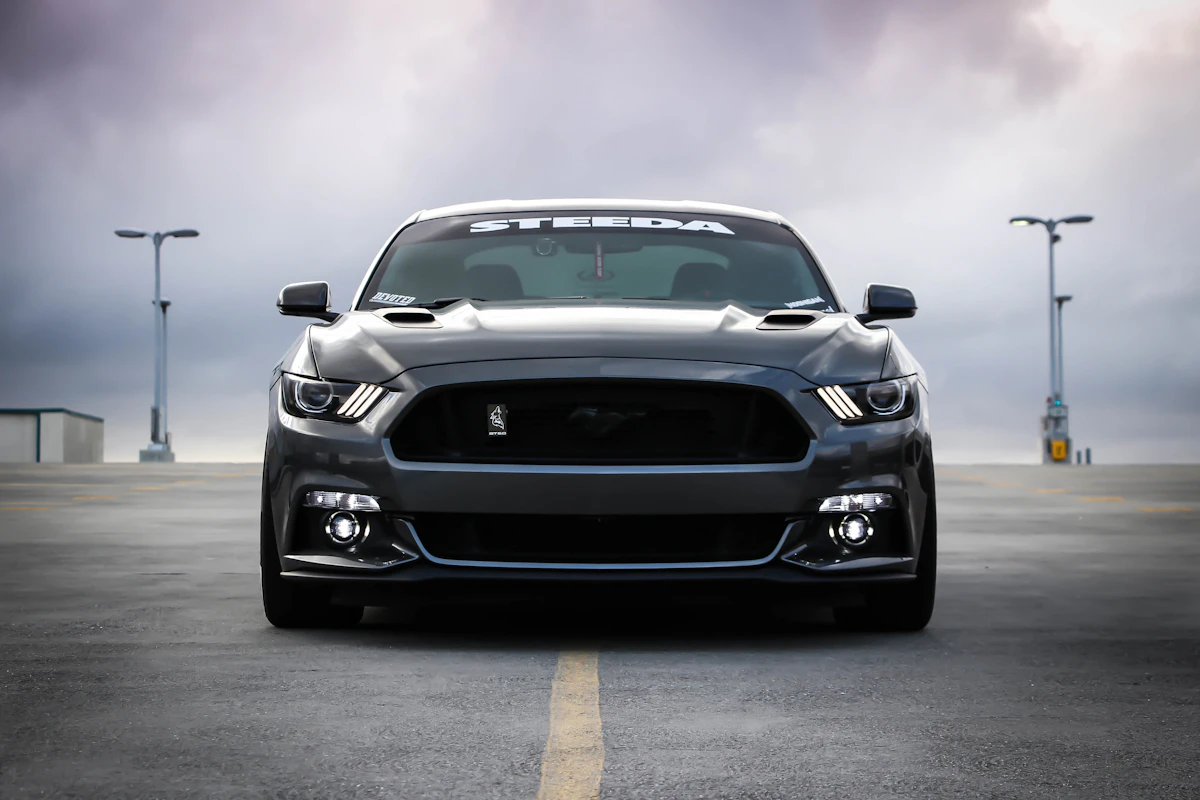
2026 Ford Mustang GT vs. 2026 Toyota GR Supra: The Data-Driven Sports Car Showdown
In an automotive landscape increasingly dominated by three-row electric crossovers and automated commuter appliances, the enthusiast sports car market has become an exclusive sanctuary for driving purists. With the Chevrolet Camaro retired and the Dodge Challenger out of production, the American rear-wheel-drive performance landscape has consolidated behind a solitary icon: the Ford Mustang.
Across the Pacific, Toyota took an entirely different route to revive its halo sports car, collaborating with BMW to engineer the two-seat, short-wheelbase Toyota GR Supra.
Now, for the 2026 model year, buyers with a budget between $45,000 and $65,000 face a tantalizing mechanical dilemma:
Do you choose the 2026 Ford Mustang GT—with its naturally aspirated 5.0-liter Coyote V8 spinning freely to 7,500 rpm, traditional 2+2 seating, and muscle car bravado? Or do you opt for the 2026 Toyota GR Supra 3.0—featuring BMW's revered B58 turbocharged inline-six, a 50:50 weight distribution, and a curb weight that undercuts the Mustang by over 400 pounds?
Treating this comparison as a simple "America vs. Japan" horsepower battle overlooks the critical engineering, ergonomic, and financial realities that dictate daily ownership. Below is an engineering-first, consumer-advocate breakdown comparing real-world transaction pricing, mechanical longevity, track handling dynamics, cargo practicality, and five-year total cost of ownership.
MSRP vs. True Market Value: Navigating Real-World Dealer Pricing
Sticker price rarely reflects what buyers actually pay when walking out of an automotive showroom. Regional allocations, sports car seasonal demand, and dealer accessory markups create substantial variance between MSRP and true market value.
+------------------------------------+--------------------------+--------------------------+
| Performance Tier                   | 2026 Ford Mustang MSRP   | 2026 Toyota GR Supra MSRP|
+------------------------------------+--------------------------+--------------------------+
| Entry Performance Specification    | $43,555 (GT Fastback)    | N/A (2.0L Discontinued)  |
| Core Enthusiast Sweet Spot         | $48,080 (GT Premium)     | $56,450 (3.0 Base)       |
| Fully Optioned Track Package       | $56,200 (GT w/ Perf Pkg) | $59,600 (3.0 Premium)    |
| Flagship Track-Specialist Trim     | $60,865 (Dark Horse)     | $65,470 (45th Anniv/Spec)|
+------------------------------------+--------------------------+--------------------------+
2026 Ford Mustang GT Dealer Dynamics
The 2026 Ford Mustang GT benefits from strong factory production volumes out of Flat Rock Assembly in Michigan. Ford offers the Mustang GT in standard Fastback, GT Premium, and convertible variants, crowned by the high-performance Dark Horse.
Because the Mustang serves both rental fleets and retail buyers, standard GT Fastback and GT Premium models frequently experience stable showroom supply. In competitive metropolitan markets, buyers can routinely negotiate $1,000 to $2,500 below MSRP on standard GT inventory. However, finding a manual transmission GT equipped with the GT Performance Package (which adds Brembo brakes, Torsen limited-slip differential, MagneRide damping, and wider staggered wheels) or a Mustang Dark Horse (with the Tremec TR-3160 transmission) commands sticker price, with some dealerships still attempting to attach $3,000 to $5,000 "market adjustment" fees.
2026 Toyota GR Supra Showroom Realities
Unlike Ford, Toyota produces the GR Supra in strictly limited numbers via Magna Steyr in Graz, Austria. For 2026, Toyota has fully discontinued the entry-level 2.0-liter turbocharged four-cylinder, making the 3.0-liter B58 inline-six the standard and exclusive powertrain.
Because annual North American allocations rarely exceed 3,500 units, finding an unsold GR Supra sitting on a dealer lot is uncommon. Units equipped with the 6-speed intelligent manual transmission (iMT) turn over in under 10 days. Dealerships routinely attach non-negotiable dealer add-ons—including ceramic coatings, wheel protection policies, and interior fabric guard packages—costing $1,500 to $3,000 above MSRP. Securing a manual Supra 3.0 at invoice is virtually impossible without national inventory hunting.
Powertrains, Transmissions & Mechanical Longevity
The mechanical contrast between these two performance machines represents two divergent philosophies of internal combustion.
Ford 5.0L Coyote V8: Naturally Aspirated Atmospheric Euphoria
- Engine Architecture: The fourth-generation 5.0-liter Coyote V8 utilizes an aluminum block, dual overhead camshafts, 32 valves, and innovative dual throttle bodies fed by twin air intakes. It generates 480 horsepower and 415 lb-ft of torque in standard trim, rising to 486 hp and 418 lb-ft with the factory active-valve performance exhaust system, and 500 hp in the Mustang Dark Horse.
- Power Delivery & Character: Peak power arrives at an intoxicating 7,150 rpm, with redline set at 7,500 rpm. The Coyote demands revs to make serious speed; low-end torque below 2,500 rpm is adequate but lacks the instant shove of forced induction. The sensory experience—marked by an authentic, visceral American V8 rumble—remains unmatched in modern motoring.
- Transmission Choices: Buyers can choose between the standard Getrag MT-82 6-speed manual (which features rev-matching but retains a somewhat rubbery shift gate) or Ford’s rapid-shifting 10-speed SelectShift automatic. Track enthusiasts seeking maximum manual durability should prioritize the Mustang Dark Horse, which upgrades to a heavy-duty Tremec TR-3160 6-speed manual with a titanium shift ball.
Toyota/BMW 3.0L B58 Turbo: The Gold Standard of Boosted Inline-Sixes
- Engine Architecture: Sourced directly from BMW, the 3.0-liter B58 engine is a turbocharged, direct-injected DOHC inline-six featuring a twin-scroll turbocharger, air-to-water intercooler, variable valve timing (Double-VANOS), and variable valve lift (Valvetronic). It delivers 382 horsepower and 368 lb-ft of torque.
- Power Delivery & Character: While yielding 98 to 118 peak horsepower to the Coyote V8 on paper, the B58 engine produces its 368 lb-ft of maximum torque across a broad plateau from 1,800 to 5,000 rpm. In real-world driving, the Supra feels significantly quicker out of tight corners and highway on-ramps because full boost is available almost immediately off idle.
- Transmission Choices: Enthusiasts can specify either a close-ratio 6-speed intelligent Manual Transmission (iMT) with automatic rev-matching software or the renowned ZF 8-speed torque-converter automatic. The ZF 8-speed is virtually telepathic in manual paddle mode, executing upshifts in under 200 milliseconds while maintaining bulletproof daily manners.
Mechanical Longevity & Long-Term Reliability
- Ford Coyote Reliability: The 5.0L Coyote is an extremely robust powerplant with hundreds of thousands of commercial and consumer units in service. Maintenance costs are low, and replacement parts are available at every neighborhood auto retailer. However, high-RPM track use demands watchful monitoring of oil consumption, and Getrag MT-82 shift forks are prone to wear under aggressive track shifting.
- Toyota/BMW B58 Reliability: Automotive engineers widely recognize the BMW B58 as one of the most reliable and over-engineered German powertrains of the modern era, featuring a closed-deck block design and forged steel crankshaft. However, long-term ownership past 80,000 miles involves costlier maintenance: cooling system plastic hoses, oil filter housing gaskets, and electric water pumps require proactive service, and shop labor rates for German architectures run 30% higher than domestic platforms.
Head-to-Head Specification Matrix
| Metric / Specification | 2026 Ford Mustang GT Premium (Manual) | 2026 Toyota GR Supra 3.0 (Manual) | Competitive Advantage / Winner |
|---|---|---|---|
| Base Starting MSRP | $48,080 | $56,450 | Ford Mustang GT (+$8,370 Price Advantage) |
| Engine Configuration | 5.0L Naturally Aspirated V8 | 3.0L Twin-Scroll Turbo Inline-6 | Tie (Atmospheric V8 vs. Boosted I6) |
| Peak Horsepower | 486 hp @ 7,250 rpm (w/ Active Exh) | 382 hp @ 5,800–6,500 rpm | Ford Mustang GT (+104 Horsepower) |
| Peak Torque | 418 lb-ft @ 4,900 rpm | 368 lb-ft @ 1,800–5,000 rpm | Toyota GR Supra (Broad Low-End Torque) |
| Curb Weight | 3,832 lbs (Dark Horse: 3,949 lbs) | 3,400 lbs | Toyota GR Supra (432 lbs Lighter) |
| Weight Distribution | 55% Front / 45% Rear | 50% Front / 50% Rear | Toyota GR Supra (Neutral Balance) |
| 0–60 MPH Acceleration | 4.2 sec (Manual) / 3.9 sec (Auto) | 4.2 sec (Manual) / 3.9 sec (Auto) | Tie (Dead Heat in Real-World Testing) |
| Quarter-Mile Time | 12.3 sec @ 115 mph | 12.1 sec @ 116 mph | Toyota GR Supra (Power-to-Weight Edge) |
| Braking (60–0 MPH) | 104 feet (Brembo Package) | 101 feet | Toyota GR Supra (Lighter Braking Mass) |
| Seating Configuration | 2+2 (4 Passengers) | Strictly 2 Passengers | Ford Mustang GT (Child/Luggage Utility) |
| Trunk / Cargo Volume | 13.3 cubic feet | 10.2 cubic feet (Liftback) | Ford Mustang GT (+3.1 cu ft Enclosed) |
| Fuel Economy (City/Hwy/Comb) | 14 / 23 / 17 MPG (Manual) | 19 / 27 / 21 MPG (Manual) | Toyota GR Supra (+4 MPG Combined) |
| Highway Cruising Range | 368 miles (16.0-gal tank) | 370 miles (13.7-gal tank) | Toyota GR Supra (Superior Cruising Range) |
| Wheelbase Length | 107.0 inches | 97.2 inches | Toyota GR Supra (9.8 in Shorter / Nimbler) |
Track Dynamics, Curb Weight & Chassis Agility
On paper, the Mustang GT’s massive 104-horsepower advantage suggests it would easily outrun the Toyota on a road course. On asphalt, however, physics tells a very different story.
The 432-Pound Weight Penalty
The single greatest differentiator between these vehicles is mass. Tipping the scales at 3,400 pounds, the Toyota GR Supra operates in a completely different weight class than the 3,832-pound Mustang GT Fastback (and the 3,949-pound Mustang Dark Horse).
Entering high-speed braking zones, the Supra requires less pedal effort, exhibits virtually zero brake fade, and transitions through mid-corner esses with immediate agility. Its compact 97.2-inch wheelbase—shorter than a Toyota GR86—allows the driver to pivot the chassis on throttle rotation. With a perfect 50:50 weight distribution, the Supra feels like a scalpel.
The Mustang GT’s Brute-Force Mastery
The Mustang GT fights back through chassis width, tire contact patch, and raw aerodynamic development. When equipped with the optional GT Performance Package, Ford equips the Mustang with 255/40R19 front and massive 275/40R19 rear Pirelli P Zero tires, 390mm Brembo front brake rotors, and MagneRide magnetorheological adaptive dampers.
Through fast sweeping corners and long straightaways, the Mustang feels planted, commanding, and extremely stable. Its longer 107.0-inch wheelbase provides higher directional confidence at 130+ mph, and the ferocious surge of the Coyote V8 pulling toward 7,500 rpm creates higher trap speeds on long road course straights. However, in tight low-speed hairpins, the Mustang’s nose-heavy 55:45 weight balance requires patience to avoid pushing into understeer.
Daily Usability, Ergonomics & Practical Utility
A performance car that is too punishing or compromised to drive daily quickly becomes an expensive garage ornament. Here, the packaging priorities of Ford and Toyota diverge sharply.
Ford Mustang: The Practical Daily Muscle Cruiser
- Cockpit Ergonomics: The Mustang’s cabin features a sweeping dual-screen digital display integrating a 12.4-inch instrument cluster and a 13.2-inch SYNC 4 infotainment system running Unreal Engine 3D graphics. Visibility out of the windshield and side quarters is generous, making parking lots and urban commuting stress-free.
- Passenger Utility: The Mustang provides 2+2 seating. While the rear seats are too tight for full-sized adults on extended trips, they comfortably accommodate children, pets, or overnight soft duffel bags.
- Cargo Capacity: The traditional enclosed trunk provides 13.3 cubic feet of luggage capacity, expanding further via 50/50 folding rear seatbacks. You can comfortably transport two full golf bags, a folding bicycle, or a week’s worth of family groceries.
Toyota GR Supra: The Focused Cockpit Capsule
- Cockpit Ergonomics: Dropping into the GR Supra feels like entering a low-slung Le Mans prototype. The cabin is deeply driver-focused, with BMW-derived iDrive physical control knobs, supportive sport bucket seats, and thick bolstering. However, the aggressive double-bubble roofline and thick rear pillars produce severe rear blind spots, necessitating constant reliance on blind-spot monitoring and the backup camera. Taller drivers over 6'2" will also experience helmet clearance limitations during track days.
- Wind Buffeting Issue: Early Supra models suffered severe aerodynamic wind buffeting when driving with windows lowered at speeds over 45 mph. While 2026 models feature revised mirror aerodynamics, open-window cruising remains significantly noisier and more turbulent than in the Mustang.
- Cargo Utility: The Supra offers an open 10.2 cubic-foot liftback cargo bay connected directly to the passenger compartment. While useful for luggage, it lacks an enclosed trunk barrier, meaning cargo odors and road noise from the rear suspension enter the cabin directly.
5-Year Cost of Ownership (TCO) & Depreciation Curves
Evaluating the long-term balance sheet of an enthusiast sports car involves tracking depreciation, insurance premiums, scheduled maintenance, and tire replacement frequencies.
5-Year Projected Financial Breakdown (75,000 Miles Total)
--------------------------------------------------------------------------------
Cost Category                     2026 Ford Mustang GT           2026 Toyota GR Supra
                                  Premium ($48.0k MSRP)          3.0 ($56.4k MSRP)
--------------------------------------------------------------------------------
Depreciation (5 Years)            -$17,760 (37% value loss)      -$18,064 (32% value loss)
Fuel Expenses (75k Miles)         $15,882 (17 MPG @ $3.60/gal)   $12,857 (21 MPG @ $3.60/gal)
Insurance Premiums (5 Years)      $11,850                        $10,200
Scheduled Maintenance & Brakes    $4,600 (Ford Service Rates)    $6,200 (BMW Parts Matrix)
Tire Replacements (3 Sets)        $3,600                         $3,900
--------------------------------------------------------------------------------
Total 5-Year Estimated Outlay     $53,692                        $51,221
--------------------------------------------------------------------------------
Net Financial Advantage: Toyota GR Supra saves an estimated $2,471 over 5 years.
1. Residual Value Dynamics
The Toyota GR Supra benefits from strict production limits and high enthusiast demand on the secondary market. Manual 3.0-liter Supras routinely retain 68% of original value after 5 years, behaving like modern collector vehicles. The Ford Mustang GT retains approximately 63% of its original value, impacted by broader mass-market depreciation and higher overall supply on used car lots.
2. Fuel Burn Over 75,000 Miles
The fuel economy gap between an atmospheric 5.0-liter V8 and an efficient turbocharged inline-six compounds dramatically over five years. The manual Mustang GT achieves an EPA-rated 17 MPG combined, consuming roughly 4,411 gallons of fuel over 75,000 miles. The manual GR Supra delivers 21 MPG combined, consuming 3,571 gallons. At $3.60 per gallon, the Supra saves its owner over $3,025 in direct fuel expenditures.
Competitor Radar: Segment Alternatives to Cross-Shop
Before signing a purchase order on a Mustang GT or GR Supra, sports car shoppers should cross-shop these key rivals:
- Nissan Z & Z NISMO: Powered by a 400-hp twin-turbo 3.0L V6, the Nissan Z offers classic Japanese sports car heritage starting around $43,000, though its manual transmission and brake hardware trail the Supra on track.
- Chevrolet Corvette Stingray (C8): Moves the engine behind the driver to deliver exotic-car proportions and a 495-hp 6.2L V8 for $68,000+, offering superior mid-engine handling but eliminating any manual transmission option.
- BMW M2: Shares the Supra's German engineering DNA but upgrades to a twin-turbo S58 inline-six pushing 473 hp with full adult-sized backseats, priced from $65,000.
- Porsche 718 Cayman: Represents the benchmark for telepathic mid-engine balance and steering feedback, though pricing rapidly exceeds $75,000 with essential performance options.
- Subaru BRZ & Toyota GR86: Pure, ultra-lightweight (2,800 lbs) rear-wheel-drive coupes starting under $32,000 for purists who prioritize driver engagement over high-horsepower drag strip times.
Frequently Asked Questions (FAQ)
Is the Toyota GR Supra faster than the Ford Mustang GT?
In a straight-line sprint to 60 mph, the Toyota GR Supra and Ford Mustang GT are dead even at 3.9 seconds with automatic transmissions and 4.2 seconds with manual transmissions. However, in quarter-mile drag racing and high-speed circuit driving, the lighter GR Supra (3,400 lbs) edges ahead with an average 12.1-second pass compared to the heavier Mustang GT's 12.3-second time.
Is the 2026 Toyota GR Supra built by BMW?
Yes, the Toyota GR Supra was co-developed with BMW, utilizing BMW’s CLAR platform, B58 turbocharged 3.0-liter engine, ZF transmission, and cabin electronics, assembled by Magna Steyr in Austria. However, Toyota engineers conducted independent suspension tuning, steering calibration, differential programming, and chassis stiffening to give the Supra its own distinct Japanese sports car identity.
Does the Ford Mustang GT have back seats that adults can use?
No, while the Ford Mustang GT features 2+2 seating with two rear passenger buckets, legroom and headroom are severely restricted, making them suitable only for small children, pets, or luggage. In contrast, the Toyota GR Supra is strictly a two-seater with zero rear seating capacity, separating the front cabin from the rear cargo hatch with an integrated structural brace.
Which car is cheaper to maintain: the Mustang GT or Toyota Supra?
The Ford Mustang GT is significantly cheaper to maintain than the Toyota GR Supra due to its widespread domestic parts availability, simpler naturally aspirated engine design, and lower dealership labor rates. Because the GR Supra utilizes BMW engine components, sensors, and fluids, routine repairs and replacement parts carry European luxury pricing that costs roughly 25% to 35% more over time.
Which sports car sounds better: the Mustang GT V8 or Supra Inline-6?
The Ford Mustang GT delivers a significantly louder, deeper, and more visceral exhaust note thanks to its naturally aspirated 5.0-liter Coyote V8 and quad-tipped active valve performance exhaust. While the Toyota Supra’s B58 inline-six offers a pleasing mechanical hum with turbocharged pops and burbles on deceleration, it cannot match the raw acoustic presence of an 7,500-rpm American V8.
Final Verdict: Which Sports Car Should You Buy?
Both nameplates represent peak modern sports car engineering, yet they target completely distinct driving passions:
- Buy the 2026 Ford Mustang GT if you crave the thunderous acoustic soul of a naturally aspirated 5.0L V8, iconic American muscle styling, the daily practicality of 2+2 seating with an enclosed trunk, and low-cost domestic maintenance. At a starting price below $49,000, it remains the absolute best horsepower-per-dollar bargain in performance motoring.
- Buy the 2026 Toyota GR Supra if you demand a purist sports car experience defined by a featherweight 3,400-lb curb weight, 50:50 balance, relentless turbocharged low-end torque, razor-sharp track handling, and high secondary market value retention. It is an authentic, focused driver’s instrument designed to conquer apexes.
Compare Real-Time Sports Car Inventory & True Market Values on Differ-X
Don't overpay for dealer markups or inflated sport packages. Visit Differ-X (https://www.differ-x.com) to compare side-by-side vehicle performance specifications, monitor live regional price variances across thousands of active dealership listings, analyze 5-year depreciation curves, and audit complete VIN vehicle history reports before taking delivery.