September 30, 2026
2026 Chevrolet Corvette Stingray vs. 2026 Porsche 911 Carrera: The Mid-Engine Value vs. German Benchmark
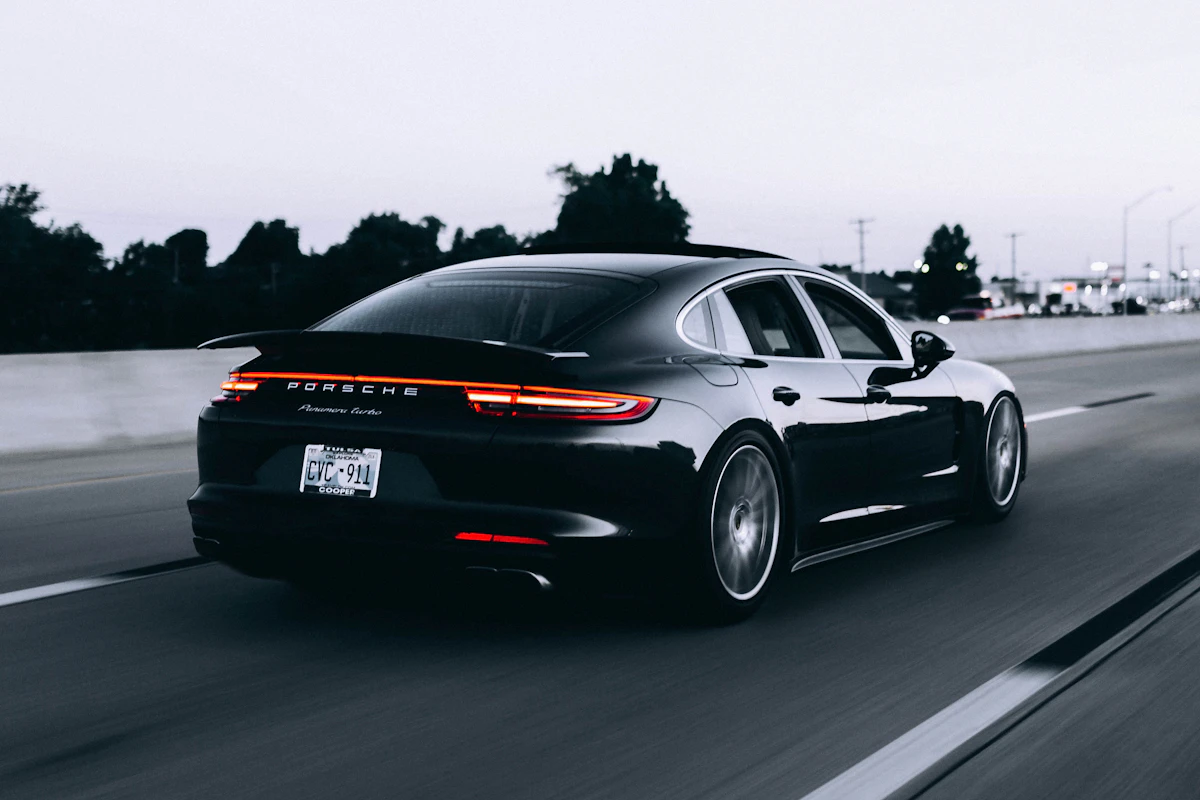
2026 Chevrolet Corvette Stingray vs. 2026 Porsche 911 Carrera: The Mid-Engine Value vs. German Benchmark
For decades, comparing a Chevrolet Corvette to a Porsche 911 felt like an apples-to-oranges theoretical debate. The Corvette was the quintessential front-engine, pushrod V8 American muscle car—brutish, affordable, and raw. The Porsche 911 was the refined, rear-engine German benchmark—cerebral, surgically balanced, and unapologetically expensive.
Check live pricing on the vehicles in this article
Tap a vehicle for real dealer listings near you, or add two or more and compare them side by side.
Chevrolet Bolt EV
Budget EV · cheap to run
Honda Pilot
3-row SUV · space
That paradigm permanently shattered with Chevrolet's revolutionary shift to the mid-engine C8 architecture.
Now entering the 2026 model year, the mid-engine Chevrolet Corvette Stingray has matured into an established track-weapon exotic killer. Simultaneously, Porsche has rolled out the refreshed 992.2-generation Porsche 911 Carrera, introducing modern digital architecture, enhanced aerodynamic cooling, and a recalibrated twin-turbo flat-six.
This brings sports car enthusiasts and high-performance buyers face-to-face with the ultimate $70,000 question:
Can a $68,300 Chevrolet Corvette Stingray genuinely match the tactile poise, daily usability, and engineering prestige of a $122,095 Porsche 911 Carrera? Or does the 911’s near-double price tag justify itself through benchmark build quality, telepathic PDK shifting, and industry-leading resale retention?
Below is an engineering-focused, consumer-advocate deep dive analyzing real-world transaction pricing, powertrain reliability, track ergonomics, daily cargo packaging, and five-year total cost of ownership.
MSRP vs. True Market Value: The Real-World Cost Gap
On manufacturer configurators, the price delta between these two performance icons is striking. In real-world dealership showrooms, however, the financial gap expands even further.
+------------------------------------+--------------------------+--------------------------+
| Specification Tier                 | 2026 Corvette Stingray   | 2026 Porsche 911 Carrera |
+------------------------------------+--------------------------+--------------------------+
| Base Model Starting MSRP           | $68,300 (1LT Coupe)      | $122,095 (Carrera Coupe) |
| Recommended Enthusiast Spec        | $79,845 (2LT w/ Z51 Pkg) | $138,500 (Optioned Spec) |
| Top-Tier Luxury / Convertible Spec | $87,445 (3LT Hardtop)    | $152,800 (Cabriolet/Opt) |
| High-Performance Variant           | $112,700 (Corvette Z06)  | $166,895 (Carrera GTS)   |
+------------------------------------+--------------------------+--------------------------+
2026 Chevrolet Corvette Stingray Pricing Realities
When Chevrolet launched the eighth-generation Corvette, speculative buyers faced multi-year waiting lists and predatory dealer markups exceeding $15,000 to $25,000. For 2026, factory production at GM's Bowling Green Assembly plant in Kentucky has fully satisfied baseline demand.
Today, standard 1LT, 2LT, and 3LT Corvette Stingray models sit in steady showroom inventory across North America. Realistic buyers can easily secure standard Stingray inventory at exact MSRP or negotiate $1,500 to $3,500 in dealer discounts during seasonal slowdowns. Only specialized variants—such as the flat-plane crank Corvette Z06, widebody electrified Corvette E-Ray, or factory custom orders with carbon-fiber aero packages—continue to command strict sticker pricing.
2026 Porsche 911 Carrera (992.2) Allocation Economics
Securing a Porsche 911 is an entirely different dealership ritual. Porsche carefully constrains global allocation volumes out of Zuffenhausen, Germany. Furthermore, finding a "base" 911 Carrera with zero options is virtually non-existent; Porsche’s extensive personalization catalog practically guarantees that customer orders add $15,000 to $25,000 in essential options.
Key enthusiast necessities—including the Sport Chrono Package ($2,790), Sport Exhaust System ($2,950), PASM Sport Suspension ($1,020), and premium leather interior upgrades ($4,530)—routinely push the real-world transaction price of an entry Carrera to $138,000–$145,000. Furthermore, many metro Porsche centers still mandate purchase relationship histories or apply $5,000 to $10,000 dealer markups on incoming 992.2 allocation slots.
Powertrains, Transmissions & Mechanical Longevity
The mechanical contrast between Bowling Green, Kentucky and Stuttgart-Zuffenhausen reflects two divergent schools of internal combustion excellence.
Chevrolet 6.2L LT2 Small-Block V8: Atmospheric American Thunder
- Engine Architecture: Mounted directly behind the cockpit, the Corvette’s 6.2-liter naturally aspirated LT2 small-block V8 utilizes an aluminum block, 16 overhead valves operated via pushrods, variable valve timing, and dry-sump lubrication. It produces 490 horsepower and 465 lb-ft of torque in standard trim, increasing to 495 horsepower and 470 lb-ft of torque with the dual-mode performance exhaust included in the Z51 Performance Package.
- Power Character: Peak power hits at 6,450 rpm, while maximum torque arrives at 5,150 rpm. Because it is naturally aspirated, throttle response is instantaneous; there is zero turbo lag when rolling onto the accelerator mid-corner. The acoustic signature is deep, guttural, and unashamedly American.
- Transmission: All C8 Corvettes route power through an 8-speed dual-clutch transmission engineered in partnership with Tremec (TR-9080). Featuring steering-wheel paddle shifters, it executes lightning-fast shifts in track mode while providing docile, torque-converter-like smoothness in automatic touring mode.
Porsche 3.0L Twin-Turbo Flat-Six: The Masterclass in Forced Induction
- Engine Architecture: Positioned over the rear axle, Porsche's 3.0-liter twin-turbocharged boxer flat-six features dual overhead camshafts, 24 valves, direct injection, and charge-air coolers adopted from the previous-generation GTS. In 992.2 specification, it generates 388 horsepower and 331 lb-ft of torque.
- Power Character: While yielding a massive 107 horsepower and 139 lb-ft of torque to the Corvette on paper, Porsche’s twin-turbo flat-six makes its maximum torque across an ultra-wide plateau from 1,950 to 5,000 rpm. Boost builds almost instantaneously, giving the Carrera immediate, effortless passing power at highway speeds without requiring downshifts.
- Transmission: Power reaches the rear wheels exclusively via Porsche’s proprietary 8-speed Doppelkupplung (PDK). Widely considered the undisputed gold standard of dual-clutch transmissions, the PDK exhibits psychic shift logic in automatic mode and instant, rifle-bolt gear swaps when pulling the aluminum paddles.
Mechanical Longevity & Long-Term Reliability
- Chevrolet LT2 Reliability: The pushrod small-block V8 is historically celebrated for mechanical simplicity and ease of repair. Parts are plentiful and affordable across thousands of Chevrolet dealerships nationwide. However, early C8 model years experienced occasional Tremec DCT solenoid stickiness, transmission valve body replacements, and valve spring concerns that required warranty updates. By 2026, GM has largely ironed out transmission calibration bugs through updated transmission fluid filter maintenance intervals.
- Porsche Flat-Six Reliability: Porsche consistently finishes near the top of J.D. Power Vehicle Dependability studies for premium sports cars. The 3.0L boxer motor has proven remarkably resilient under punishing track use. However, out-of-warranty ownership past 60,000 miles is significantly more expensive: rear-engine packaging makes routine labor intensive (many major engine repairs require dropping the entire rear subframe), and dealer labor rates frequently exceed $250 to $350 per hour.
Head-to-Head Specification Matrix
| Metric / Specification | 2026 Chevrolet Corvette Stingray (2LT Z51) | 2026 Porsche 911 Carrera (992.2 PDK) | Competitive Advantage / Winner |
|---|---|---|---|
| Tested Transaction Price | ~$79,845 | ~$138,500 | Corvette Stingray (+$58,655 Price Advantage) |
| Engine Architecture | 6.2L Naturally Aspirated V8 | 3.0L Twin-Turbocharged Flat-6 | Tie (Atmospheric V8 vs. Boosted Flat-6) |
| Horsepower | 495 hp @ 6,450 rpm | 388 hp @ 6,500 rpm | Corvette Stingray (+107 Horsepower) |
| Torque | 470 lb-ft @ 5,150 rpm | 331 lb-ft @ 1,950–5,000 rpm | Corvette Stingray (+139 lb-ft Torque) |
| Engine Placement | Mid-Engine (Behind Cockpit) | Rear-Engine (Over Rear Axle) | Corvette Stingray (True Mid-Engine Balance) |
| Transmission Type | 8-Speed Tremec Dual-Clutch | 8-Speed Porsche PDK Dual-Clutch | Porsche 911 (World-Benchmark PDK Refinement) |
| Curb Weight | 3,647 lbs | 3,342 lbs | Porsche 911 (305 lbs Lighter) |
| 0–60 MPH Acceleration | 2.9 seconds (w/ Z51 Package) | 3.7 seconds (w/ Sport Chrono) | Corvette Stingray (-0.8 sec Quicker) |
| Quarter-Mile Time | 11.2 sec @ 122 mph | 12.0 sec @ 117 mph | Corvette Stingray (Superior Drag Trap Speed) |
| Braking (60–0 MPH) | 102 feet (Z51 Brembo Brakes) | 97 feet (Porsche 4-Piston) | Porsche 911 (Shorter Stopping Distance) |
| Passenger Seating | Strictly 2 Seats | 2+2 Seating (Rear Child Bins) | Porsche 911 (Emergency Rear Luggage/Kids) |
| Total Cargo Volume | 12.6 cubic feet (Frunk + Trunk) | 4.6 cu ft (Frunk only) | Corvette Stingray (+8.0 cu ft Cargo Capacity) |
| Removable Roof | Standard Targa Roof Panel | Fixed Coupe ($2,000+ Sunroof) | Corvette Stingray (Open-Air Motoring Standard) |
| Fuel Economy (City/Hwy) | 16 / 24 / 19 Combined MPG | 18 / 24 / 20 Combined MPG | Porsche 911 (+1 MPG Combined) |
Track Dynamics, Chassis Balance & Driving Engagement
Straight-line acceleration numbers tell only part of the story. On a road course or twisty mountain pass, these chassis react with entirely different physics.
Corvette C8: The Low-Polar-Moment Mid-Engine Scalpel
The mid-engine transformation gave the C8 Corvette world-class dynamics. With the heavy 6.2L V8 positioned directly behind the driver’s shoulder blades, the car’s polar moment of inertia is concentrated near its center.
When equipped with the Z51 Performance Package—which adds Michelin Pilot Sport 4S tires, an electronic limited-slip differential (eLSD), stiffer suspension tuning, front splitter/rear spoiler aero, and optional MagneRide 4.0 adaptive dampers—the Corvette turns in with astonishing precision. It produces over 1.04 g of lateral grip, allowing drivers to trail-brake deep into apexes and power out without upsetting the rear tires. However, the electric power steering calibration, while accurate and fast, lacks the granular pavement feedback transmitted through the Porsche’s rim.
Porsche 911: The Telepathic Engineering Benchmark
The Porsche 911’s rear-engine layout remains one of the greatest engineering triumphs in automotive history. By hanging the engine over the rear axle, Porsche engineers achieve immense mechanical traction during corner exit: as weight transfers rearward under acceleration, the rear tires dig in with relentless bite.
Weighing in at 3,342 pounds, the 911 Carrera is 305 pounds lighter than the Corvette Stingray. That weight reduction transforms every dynamic interaction:
- Braking Purity: The Porsche stops from 60 mph in a phenomenal 97 feet, and pedal feel remains rock-solid through multiple 20-minute track sessions.
- Steering Transparency: Porsche’s electromechanical steering remains the benchmark for the entire automotive industry, communicating subtle changes in front tire grip and camber variations directly to the driver's fingertips.
- Chassis Cohesion: While the Corvette feels like an aggressive, high-tech fighter jet, the 911 feels like an organic extension of your nervous system.
Daily Usability, Ergonomics & Practical Utility
Supercars that punish their owners during daily commutes end up gathering dust on battery tenders. Here, the design priorities of GM and Porsche create distinctly different everyday ownership experiences.
Chevrolet Corvette: High-Tech Fighter Cockpit with Dual Trunks
- Cockpit Ergonomics: The C8 interior is deeply oriented around the driver, featuring a dramatic high-center console spine lined with physical climate control buttons (the "wall of buttons") that visually isolates the passenger. Visibility through the windshield is panoramic, but rear three-quarter over-the-shoulder visibility is heavily compromised by thick B-pillars and the engine glass cover, making GM’s digital camera rearview mirror essential.
- Cargo Practicality: The Corvette’s dual-trunk packaging is remarkably clever. The deep front trunk (frunk) easily swallows an airline-compliant carry-on suitcase, while the wide rear trunk behind the engine compartment accommodates two full golf bags or the removable composite targa roof panel. Total cargo capacity is an impressive 12.6 cubic feet.
- Standard Targa Open-Air Driving: Every Corvette Stingray coupe includes a lightweight, body-colored removable roof panel that can be unlatched in under 30 seconds and stowed securely in the rear trunk, giving owners open-air motoring without paying for a convertible variant.
Porsche 911 Carrera: Elegant Luxury and 360-Degree Outward Visibility
- Cockpit Ergonomics: The 992.2 cabin represents timeless German minimalist perfection. For 2026, Porsche replaced the traditional analogue center tachometer with a fully digital 12.6-inch curved instrument display alongside a 10.9-inch Porsche Communication Management (PCM) center touchscreen. Switchgear quality, leather stitching, and button dampening feel substantially more luxurious and bespoke than in the Chevrolet.
- Outward Visibility: Thanks to upright A-pillars, thin roof pillars, and large glass windows, the 911 offers the best 360-degree outward visibility of any modern sports car. Navigating tight parking garages, merging in heavy traffic, and executing city driving is completely stress-free.
- Passenger & Storage Packaging: The 911 features traditional 2+2 seating. While the rear seats are far too compact for adults, they fold flat to create a plush 9.2 cubic-foot rear luggage shelf, supplementing the 4.6 cubic-foot front trunk. The rear seats also provide emergency seating for young children, offering family flexibility the strictly two-seat Corvette cannot match.
5-Year Cost of Ownership (TCO) & Depreciation Curves
When purchasing an elite sports car, the initial showroom invoice only tells half the financial story. Depreciation, maintenance, fuel, and insurance over 5 years create fascinating balance-sheet comparisons.
5-Year Projected Financial Breakdown (60,000 Miles Total)
--------------------------------------------------------------------------------
Cost Category                     2026 Corvette Stingray         2026 Porsche 911 Carrera
                                  2LT Z51 ($79.8k MSRP)          Optioned Spec ($138.5k MSRP)
--------------------------------------------------------------------------------
Depreciation (5 Years)            -$29,540 (37% value loss)      -$30,470 (22% value loss)
Fuel Expenses (60k Miles)         $11,368 (19 MPG @ $3.60/gal)   $10,800 (20 MPG @ $3.60/gal)
Insurance Premiums (5 Years)      $11,400                        $13,800
Scheduled Maintenance & Service   $4,800 (Chevy Labor Rates)     $9,600 (Porsche Dealer Rates)
Brakes, Rotors & Tires (2 Sets)   $4,200                         $6,100
--------------------------------------------------------------------------------
Total 5-Year Ownership Outlay     $61,308                        $70,770
--------------------------------------------------------------------------------
Net Financial Delta: The Corvette costs $9,462 less to own over 5 years, while saving $58,655 in upfront purchase capital.
1. The Porsche 911 Depreciation Superpower
The Porsche 911 boasts one of the strongest residual value curves in the entire automotive sector. Thanks to controlled production volumes, passionate global enthusiast demand, and iconic lineage, a well-maintained 911 Carrera typically retains 75% to 80% of its original value after 5 years.
The C8 Corvette Stingray, while far more stable than historical American muscle cars, suffers from higher mass-market production volumes. Once secondary market premiums evaporated, C8 Corvettes settled into standard luxury depreciation patterns, retaining roughly 60% to 65% of original MSRP after five years.
However, because the 911 starts at nearly double the price, losing 22% of a $138,500 Porsche ($30,470) equals virtually the same dollar depreciation as losing 37% of a $79,845 Corvette ($29,540).
2. Dealership Maintenance & Consumables
Where the financial equation sharply diverges is recurring routine maintenance:
- Corvette Maintenance: An annual oil and filter change utilizing Mobil 1 Supercar 0W-40 costs approximately $150 to $200 at any Chevrolet dealer. Transmission fluid filter replacements at 7,500 and 22,500 miles cost under $500. Replacement Brembo brake pads and rotors run approximately $1,200 to $1,600 per axle.
- Porsche Maintenance: Porsche dealership maintenance operates on European luxury pricing schedules. A minor annual service (oil, pollen filter, inspection) ranges from $450 to $650. Major interval services (spark plugs, drive belts, brake flush) easily surpass $1,800 to $2,500. Replacing front brake pads and rotors on a 992 Carrera at a dealership frequently totals $2,800 to $3,500.
Competitor Radar: Segment Alternatives to Cross-Shop
Before committing a deposit to a Corvette Stingray or Porsche 911 Carrera, high-performance buyers should cross-shop these key rivals:
- Chevrolet Corvette Z06: For buyers considering a $120k+ Porsche Carrera, the $112,700 Corvette Z06 upgrades to an exotic 5.5-liter flat-plane crank LT6 V8 screaming to 8,600 rpm with 670 naturally aspirated horsepower, offering true Ferrari-level acoustic theater.
- Porsche 718 Cayman GTS 4.0: Offers pure mid-engine balance and an atmospheric 4.0-liter flat-six with a 6-speed manual transmission starting around $99,000, serving as Porsche’s direct mid-engine alternative to the C8.
- BMW M4 Competition xDrive: Delivers 523 horsepower from a twin-turbo inline-six with all-wheel drive and real four-passenger practicality for $86,000, combining daily cruiser manners with brutal straight-line speed.
- Mercedes-AMG GT Coupe: Repositioned as a luxurious 2+2 grand tourer with handcrafted AMG V8 power and all-wheel drive, competing directly with the 911 Carrera from $137,000+.
- Nissan Z NISMO: A specialized 420-hp twin-turbo coupe priced at $66,000 for buyers seeking Japanese performance heritage under the $70k threshold.
Frequently Asked Questions (FAQ)
Is the Chevrolet Corvette C8 Stingray faster than the Porsche 911 Carrera?
Yes, the Chevrolet Corvette C8 Stingray is quicker in straight-line acceleration, sprinting from 0 to 60 mph in 2.9 seconds with the Z51 package compared to 3.7 seconds for the base Porsche 911 Carrera. Thanks to its 495-hp 6.2L V8 and aggressive launch control gearing, the Corvette also beats the base Carrera in the quarter-mile (11.2 seconds vs. 12.0 seconds).
Why is the Porsche 911 so much more expensive than the Corvette?
The Porsche 911 costs significantly more due to lower global production volumes, premium German assembly wages, extensive bespoke interior customization options, and Porsche’s exceptional resale value retention. Furthermore, Porsche positions the 911 in the premium luxury sector, investing heavily in steering tactile feedback, braking thermal endurance, and high-tolerance interior switchgear.
Does the Corvette Stingray have more luggage space than the Porsche 911?
Yes, the Corvette Stingray offers 12.6 cubic feet of total cargo volume across its dual front trunk and deep rear trunk, compared to just 4.6 cubic feet in the Porsche 911’s front trunk. However, the Porsche 911 features 2+2 rear seating that folds down to provide an additional 9.2 cubic feet of interior cabin storage space.
Which car is cheaper to insure and maintain: Corvette or 911?
The Chevrolet Corvette Stingray is substantially cheaper to maintain and service than the Porsche 911 thanks to widespread domestic parts availability, simpler pushrod engine design, and lower dealership labor rates. Scheduled maintenance, replacement brake pads, and routine oil services on a Porsche 911 typically cost double to triple what a Chevrolet dealership charges for the Corvette.
Can you get a manual transmission on the 2026 Corvette Stingray or 911 Carrera?
No, neither the 2026 Corvette Stingray nor the base 2026 Porsche 911 Carrera (992.2) is available with a manual transmission; both feature 8-speed dual-clutch automatic gearboxes. Buyers seeking a manual gearbox must look to the Porsche 911 Carrera T / GT3 variants, or alternative sports coupes like the Toyota GR Supra 3.0 and BMW M2.
Final Verdict: Which Sports Car Should You Buy?
Both machines represent the zenith of modern sports car engineering, yet they cater to distinctly different ownership priorities:
- Buy the 2026 Chevrolet Corvette Stingray if you want the ultimate performance bargain in automotive history—delivering exotic mid-engine styling, a 495-hp naturally aspirated V8 roar, supercar-crushing 2.9-second 0–60 acceleration, and low domestic maintenance costs. It provides 90% of the Porsche’s dynamic thrills while leaving nearly $60,000 in your bank account.
- Buy the 2026 Porsche 911 Carrera if you demand uncompromising engineering perfection, world-benchmark steering and braking feedback, telepathic PDK shifting, pristine 360-degree daily visibility, and legendary resale value retention. It is an enduring automotive icon that rewards driving purists on every single commute.
Compare Real-Time Sports Car Inventory & True Market Values on Differ-X
Whether you are hunting for an allocated Corvette Stingray Z51 or tracking live Porsche 911 Carrera inventory, avoid inflated dealer fees. Visit Differ-X (https://www.differ-x.com) to compare side-by-side vehicle performance specifications, monitor live regional price variances across thousands of active dealership listings, analyze 5-year depreciation curves, and audit complete VIN vehicle history reports before taking delivery.